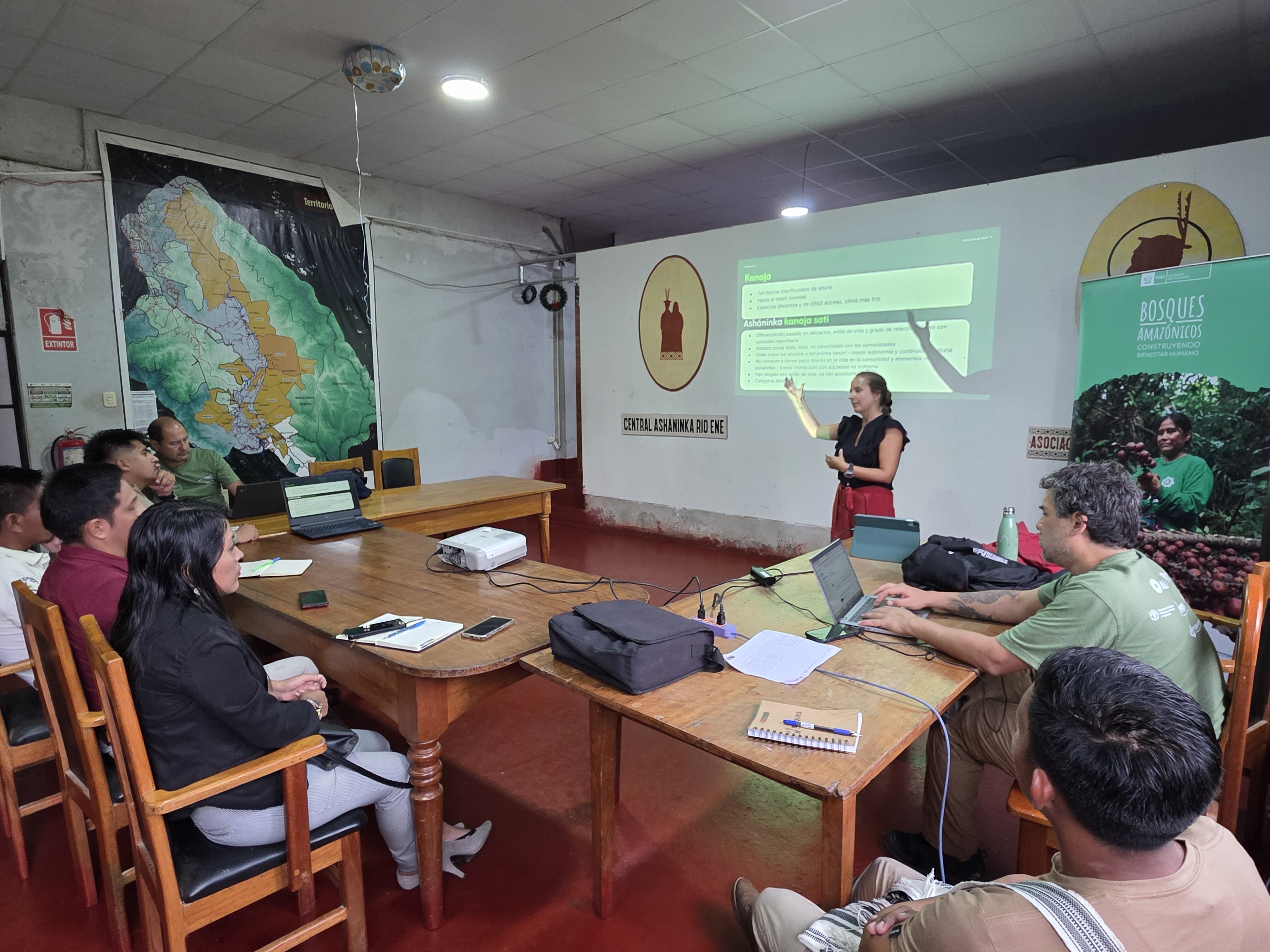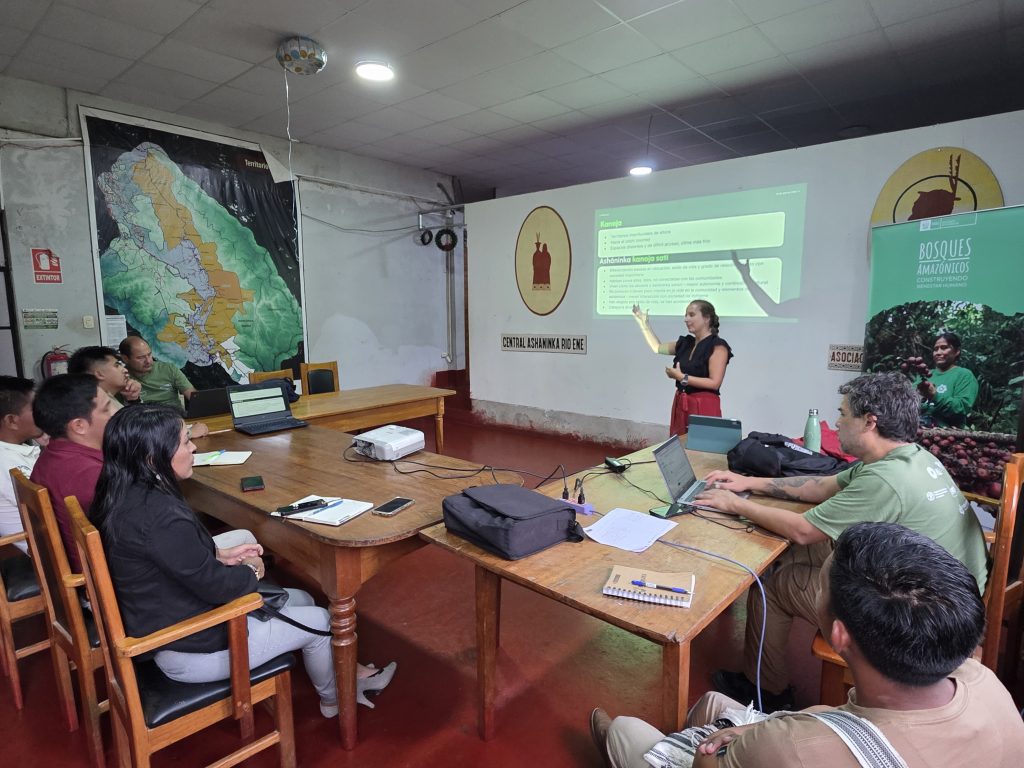
At the facilities of the Asháninka Center of the Ene River (CARE) in Satipo, the final version of the anthropological study assessing the vulnerability of Asháninka families living in Otishi National Park and the Asháninka Communal Reserve was presented.
The meeting brought together the institutions involved in the study, including representatives from the Ministry of Culture, he Sernanp, the Interethnic Association for the Development of the Peruvian Rainforest (Aidesep), the Asháninka Federation of the Ene River (FARE), the Asháninka Central Organization of the Ene River (CARE), and the Amazon Forests ASL2 project team. Also in attendance were families from the five indigenous communities that participated in the study and are located in the middle and upper Ene River regions.
The study, which began in October 2024, confirmed the presence of vulnerable indigenous families—including both those in initial contact and those in isolation—and estimated there to be 275 families in the two aforementioned protected areas. Furthermore, it highlights their high territorial, sociocultural, and immunological vulnerability to external threats such as the spread of illegal activities and the lack of basic services.
CARE President Ángel Pedro Valerio was emphatic in pointing out that “It is not enough to simply acknowledge the existence of these families; among other things, a health center is needed for the surrounding communities, because the lack of medical care puts the lives of our people at risk.”. His remarks highlighted the urgency of taking concrete measures to complement territorial protection.
Meanwhile, the representative of the Directorate for Isolated Communities and Initial Contact (DACI) of the Ministry of Culture emphasized that the findings “They are essential for guiding actions to safeguard the PIACI and ensuring that neighboring communities have access to their cultural and territorial rights within the framework of the Special Cross-Sectoral Regime.”, emphasizing the need to implement protocols to protect the rights of these populations. Similarly, Sernanp highlighted the importance of this information for more effective zoning of protected natural areas (ANPs) and for developing strategies to protect both ecosystems and vulnerable families.
This initiative by the ASL2 Amazon Forests project aims to strengthen the conservation and sustainable use of Amazonian territories. The presentation of the study represents a decisive step toward comprehensive management of Amazonian territories, with a focus on rights and the active participation of Indigenous communities. Recommendations include the formal recognition of the Asháninka Indigenous Peoples of the Amazon (PIACI), the updating of master plans, and the implementation of a special cross-sectoral framework with Indigenous participation.
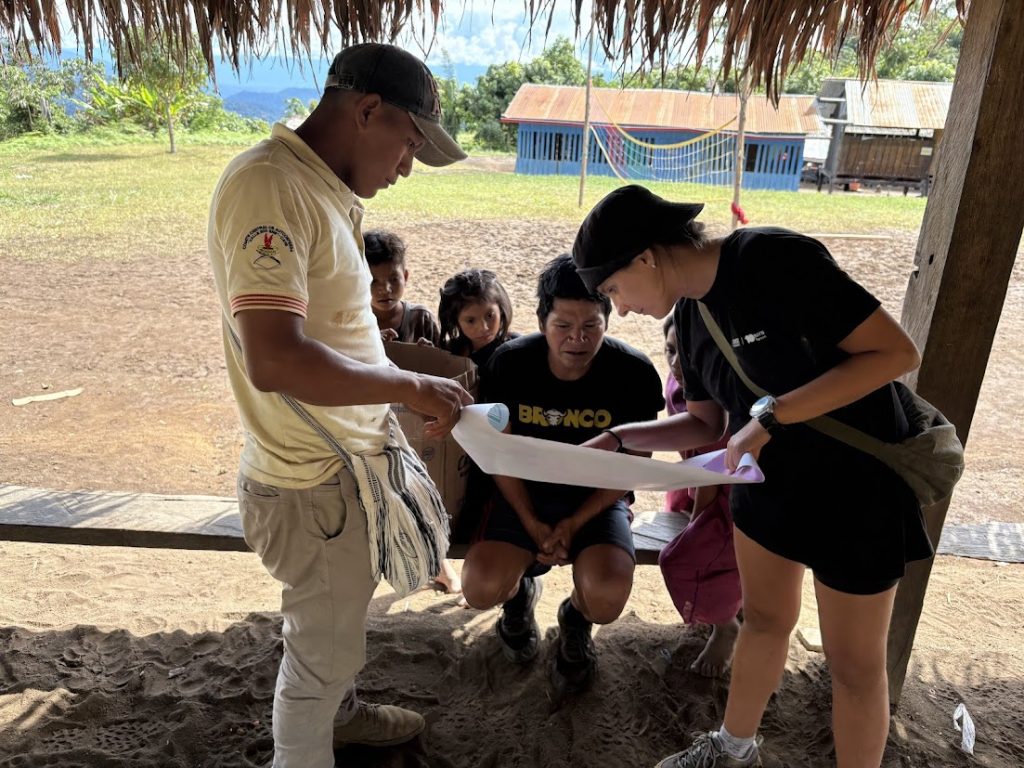
Presentation of the study to the authorities of the Parijaro Native Community
These activities are part of the Amazon Rainforests ASL2 project, led by the Ministry of the Environment and funded by the Global Environment Facility (GEF), implemented by the Food and Agriculture Organization of the United Nations (FAO), he International Fund for Agricultural Development (IFAD) and the UNIDO, and implemented by Profonanpe.