The initiative, launched in the provinces of Satipo and Atalaya in collaboration with the Asháninka Federation of the Ene River (CARE), the Asháninka Federation of the Tambo River (CART), the Regional Union of Indigenous Peoples of Atalaya (URPIA), and the Regional Coordinating Committee of Indigenous Peoples AIDESEP Atalaya (CORPIAA), seeks to strengthen the value chain of Amazonian handicrafts led by indigenous women.
Through the responsible use of dye plants such as turmeric, huito, walnut, matico, and pochotaroki, artisan women have been incorporating new techniques to diversify and improve their products, combining knowledge passed down from generation to generation with contemporary textile design methods.
This process has made it possible to develop new color schemes, improve the quality of finishes, and produce color catalogs, technical data sheets, and manuals that will help preserve and share this knowledge within the communities.
Handicrafts are an important source of income for many indigenous families in the Amazon. However, the assessment revealed the challenges faced by women in Atalaya and Satipo regarding access to markets, strengthening their economic leadership, and marketing opportunities.
Against this backdrop, the initiative aims to highlight the cultural heritage of indigenous peoples, strengthen women’s economic autonomy, and promote sustainable livelihood alternatives that contribute to the conservation of the Amazon rainforest.
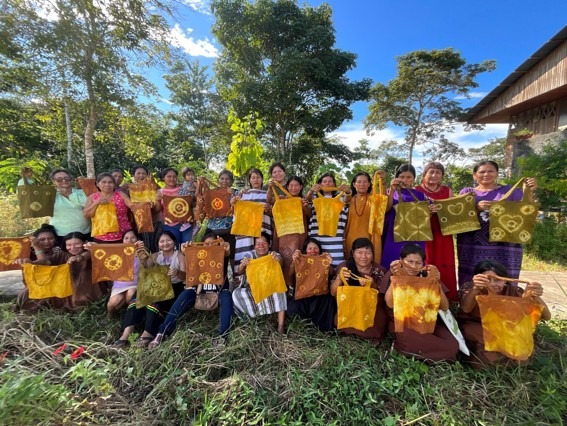
Artisans from the Ucayali River basin display bags dyed using the techniques they learned during the workshop.
Photo: Alas Inversiones.
These activities are part of the Amazon Forests ASL2 Project, led by the Ministry of the Environment and funded by the Global Environment Facility (GEF), implemented by the FAO, the International Fund for Agricultural Development (IFAD), and UNIDO, and carried out by Profonanpe.