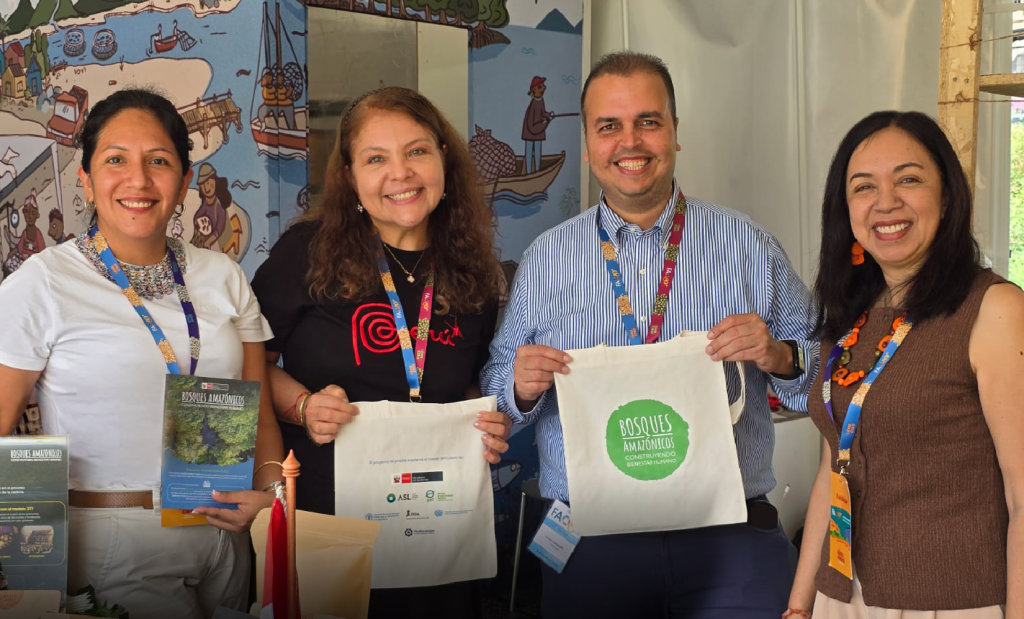
The biodiversity of the Peruvian Amazon transcends borders. From October 8 to 12, the ASL2 Amazon Forests project, led by the Ministry of the Environment (MINAM), is participating in the United Nations Food and Agriculture Organization (FAO) «From Seeds to Foods,» […]From Seeds to Food), which takes place in Rome, Italy.
The participation takes place through the exhibition «Agroforestry Systems: From the Watershed to the Sea,» located in the Latin America and Caribbean Pavilion. This exhibit showcases how sustainable agroforestry systems in the Peruvian Amazon can contribute to biodiversity conservation, food security, climate resilience, and improved livelihoods for indigenous peoples and local communities.
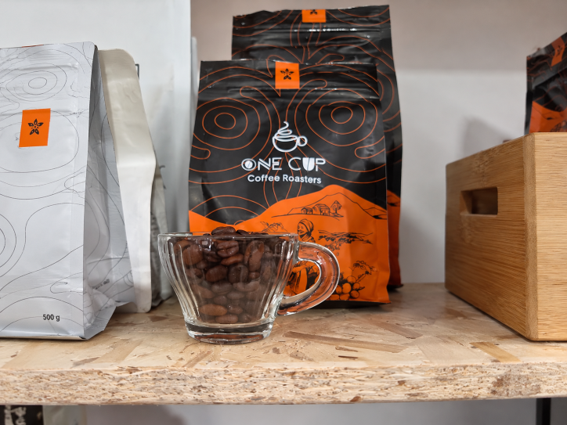
One Cup brand Amazonian coffee, one of the products on display in Rome as part of an exhibition highlighting the productive diversity of the Peruvian Amazon and its potential to access new markets.
From Amazonian Biodiversity to New Opportunities
What do camu camu, aguaje, and cacao have in common? In addition to their nutritional value, they are native species of the Peruvian Amazon with the potential to drive sustainable production chains and create economic opportunities for local communities.
This potential is showcased in Rome through products such as freeze-dried camu camu, aguaje powder, chocolates made with native fruits, and aguaje oil, which are part of the international exhibition and can be explored and sampled by visitors.
But the value of these products goes beyond their processing. It also lies in the traditional knowledge, the work of the communities, and the sustainable practices that are part of their value chains.
In fact, one of the goals of the ASL2 Amazon Forests project is to promote more sustainable and transparent supply chains through the 3T Model: traceability, transparency, and actual costs. This approach makes it possible to identify the origin of products, understand their processing methods, recognize those involved in the process, and reveal the actual costs of production, thereby contributing to a fairer distribution of the value generated.
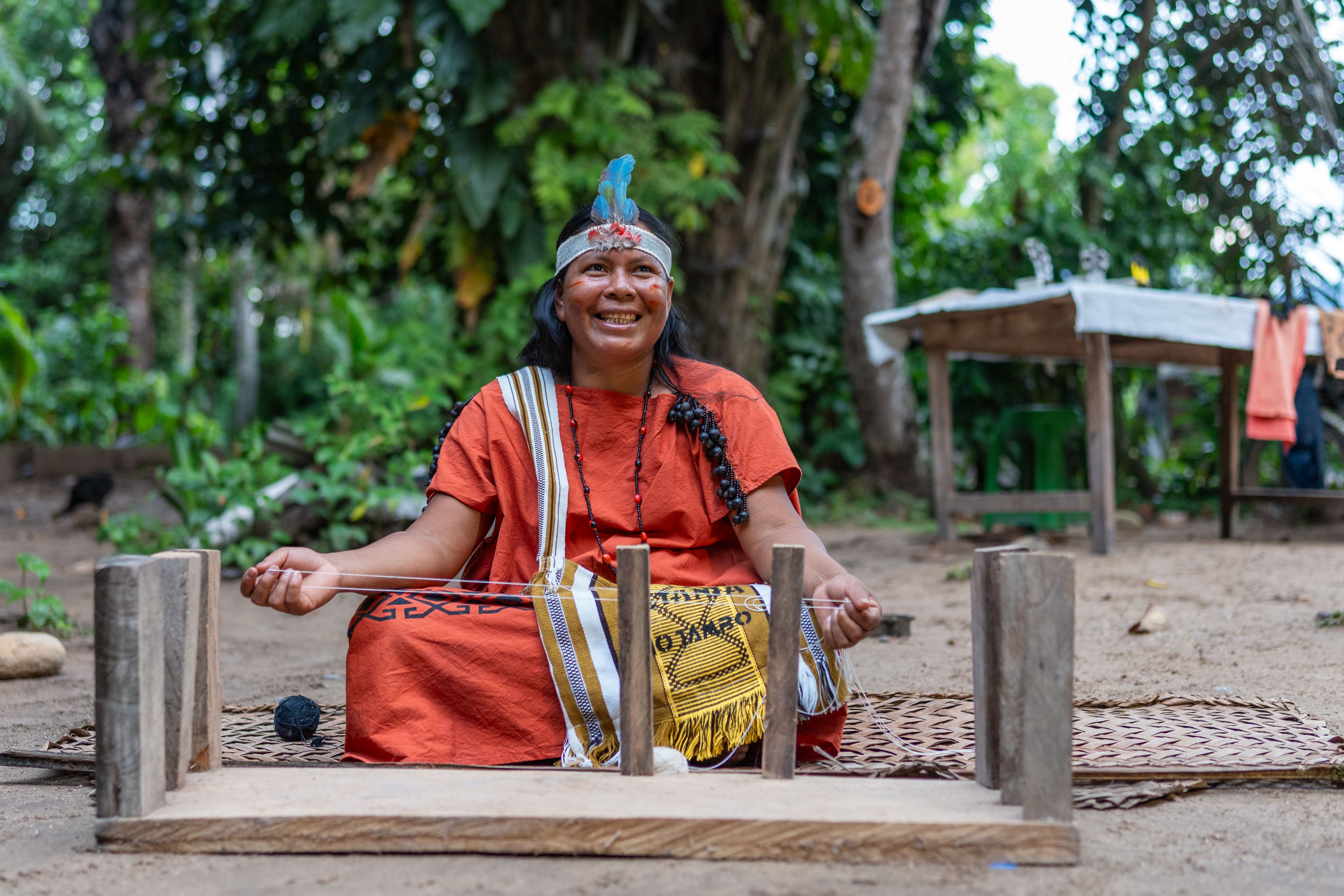
In this process, the knowledge of indigenous peoples, the leadership of women, and the participation of young people play a fundamental role. Their participation reaffirms the importance of linking the sustainable use of biodiversity to the well-being of Amazonian communities.
Preserve Forests, Create Opportunities
The presence of Bosques Amazónicos ASL2 in this international forum helps highlight the importance of integrating forest conservation with the development of sustainable productive activities, while recognizing the role of the communities that inhabit and make use of these ecosystems.
In Peru, the project operates in Loreto-Nauta (Loreto), Atalaya (Ucayali), and Satipo (Junín), where it promotes biodiversity conservation, sustainable landscape management, and the strengthening of productive activities that are compatible with the protection of Amazonian ecosystems.
Thus, participating in Rome represents an opportunity to demonstrate how the natural wealth of the Peruvian Amazon, together with the knowledge of its communities, can help build productive alternatives that promote well-being and support forest conservation.
About the Amazon Rainforests ASL2 Project
The Amazon Rainforests ASL2 project is led by the Ministry of the Environment and funded by the Global Environment Facility (GEF), implemented by the Food and Agriculture Organization of the United Nations (FAO), he International Fund for Agricultural Development (IFAD) and the UNIDO, and implemented by Profonanpe.