The project «Bad Sustainable» aims to improve the living conditions of the families of the rural community of Mala through the diversification of their sources of income, the promotion of eco-businesses, and the conservation and sustainable use of their ecosystems.
The pillars of Sustainable Mala
Mala Sostenible promotes local development through its five components
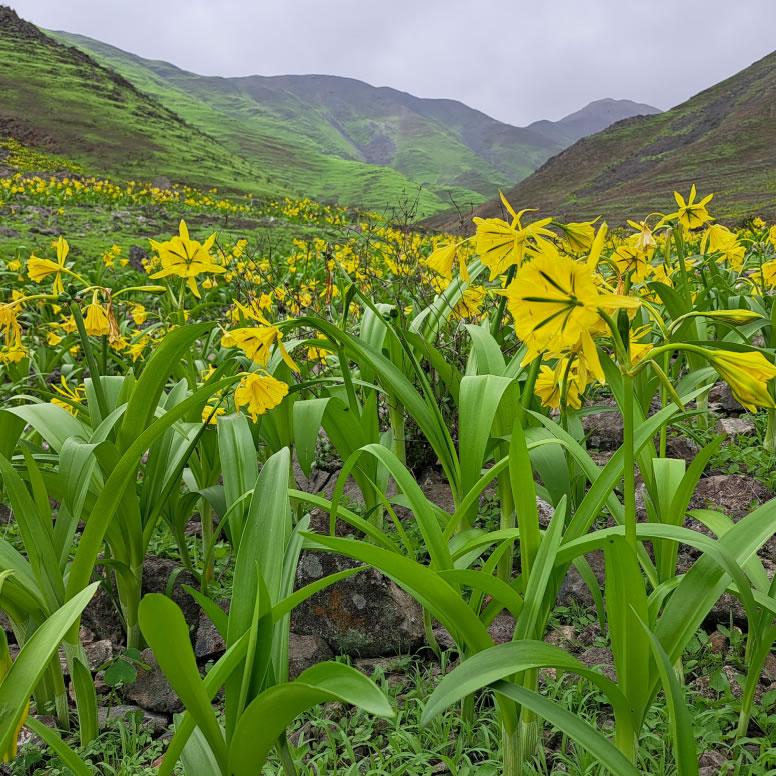
Tourism
sustainable
Development of sustainable tourism activity, through the diversification of the district's tourism offer.
Development
productive
Development of productive, profitable and environmentally sustainable activities that generate additional income for families.
Exploitation
solid waste
Improving solid waste management through an economic activity based on the use of reusable and recyclable waste, in order to generate additional income for families.
Water
Potable
Provision and improvement of the drinking water service for the Mala Peasant Community.
Management of
project
Tracking, monitoring, technical assessments, safeguards and communications.
Strategic Alliance for Sustainable Development in Mala
Compañía Minera Condestable and Profonanpe signed a framework agreement to develop projects that will primarily benefit the Mala Peasant Community, respecting the environment and promoting economic growth in the area. This strategic alliance seeks to promote initiatives that generate a positive and lasting impact, integrating social development and ecological preservation to improve the quality of life for the local residents.
Impact on families in Mala
The project is being developed in the area of direct influence of the Condestable Mining Company, and therefore seeks a tangible, real and measurable impact, mainly on the Mala Peasant Community.
We strengthen income diversification and the implementation of sustainable practices to transform the community into a model of comprehensive and equitable rural development.
Promoting new economic opportunities to encourage the conservation of their ecosystems and strengthen skills and knowledge that increase their resilience
What have we achieved?
Triple-impact eco-businesses: economic, social and environmental
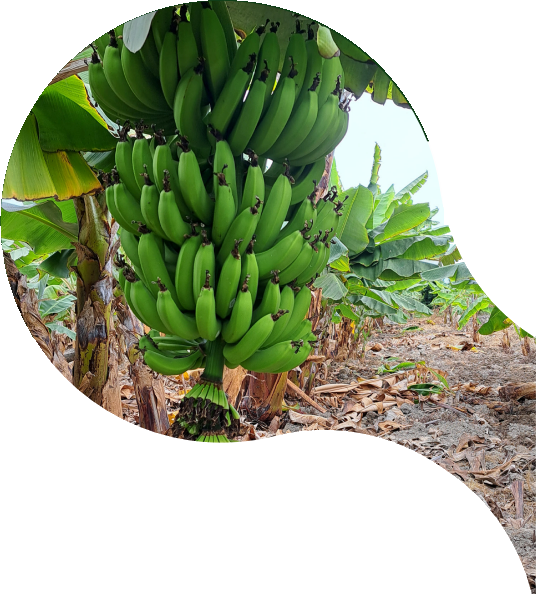
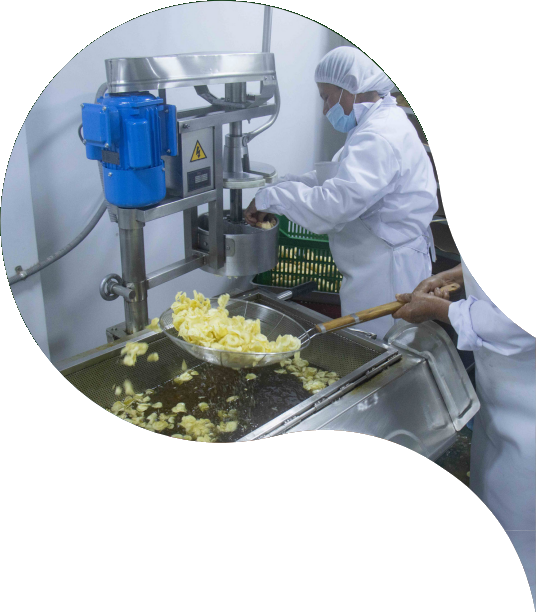
Association of Eco-producers of Derivatives of Maleño Bananas (ECODEP)
More than 22,000 bananas from Isla Maleño were prevented from rotting due to lack of market, thus avoiding the generation of greenhouse gases.
Through seed capital, as non-refundable funds, the project provided equipment and infrastructure to the ECODEP association.
10
participants
100%
women
1
record sanitary
1
brand created
2,946 KG
chifles produced
11,300 KG
banana used
11.4 T
of CO2 avoided
1,077 L
of oil recycling
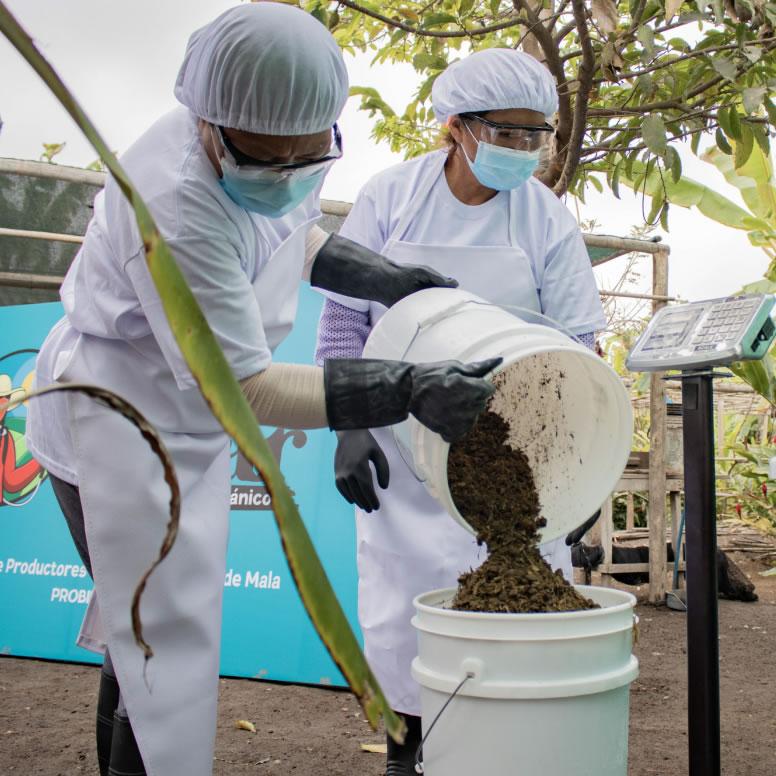
Association of Producers of Mala Biofertilizers (PROBIMA)
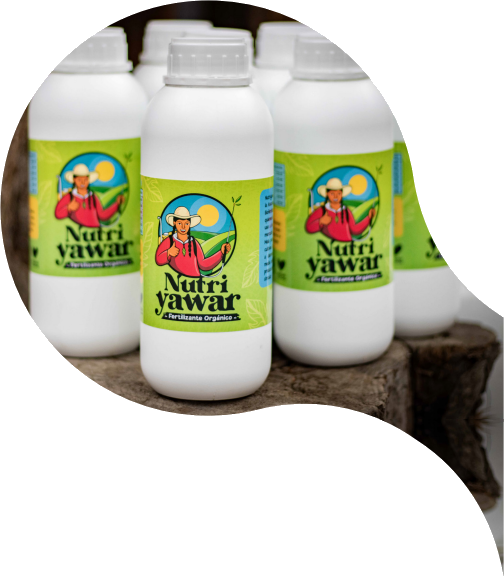
With the production of biofertilizer, More than 1,148 kilos of meat waste, goat excrement, fish viscera, and bovine blood were prevented from being wasted. end up in the municipal dump or in the Mala River.
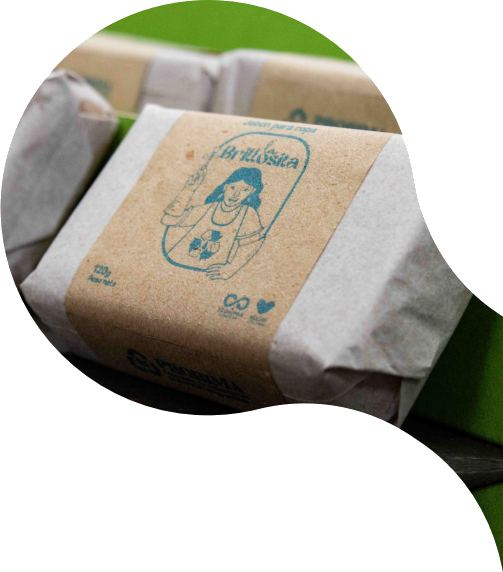
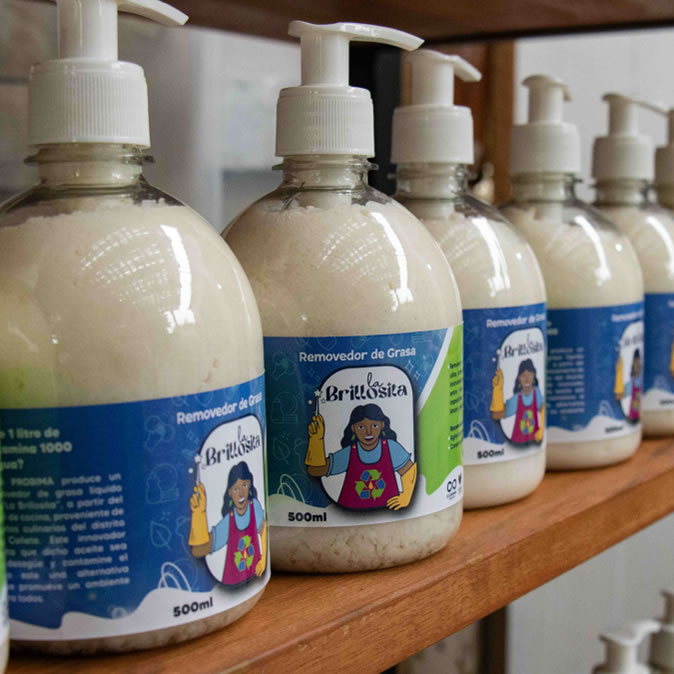
With the production of dishwashers and soaps, 348 liters of waste oil were prevented from being poured down the drain and that they contaminate more than 348,000 liters of water.
With the production of biofertilizer 417 liters of blood were used, preventing the contamination of 20.8 million liters of water. Furthermore, the product was analyzed by the National Agrarian University La Molina.
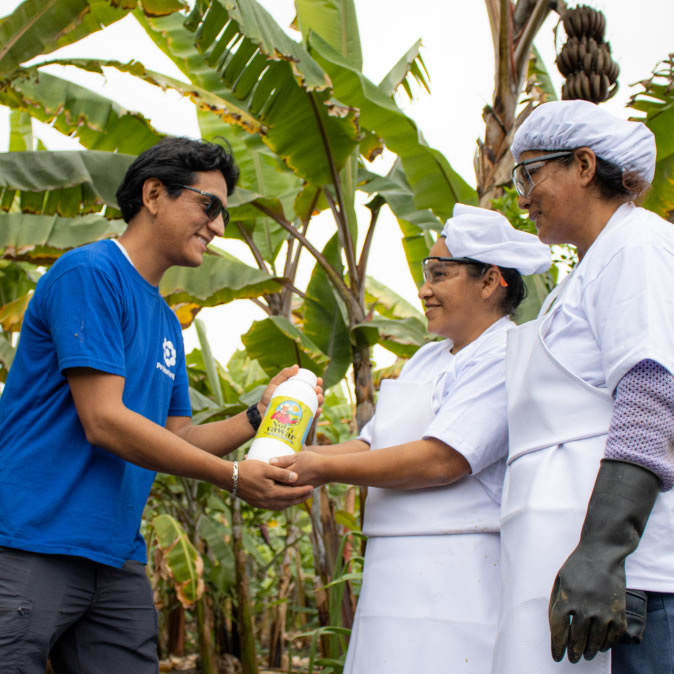
Through seed capital, such as non-refundable funds, The project provided the PROBIMA association with equipment and sustainable infrastructure.
12
participants
83%
women
2
brands created
2,820 L
biofertilizer liquid produced
2,423 L
removedor de grasa producido
2,884
jabones
produced
1,148 KG
residuos orgánicos opportunists
21,1 M L
of water not contaminated
96 KG
biofertilizer pelletized produced
Organic Bioconversion Association for the Organic Protein Production with Technology Integrated and Environmentally Aware – BIOPROTEIC
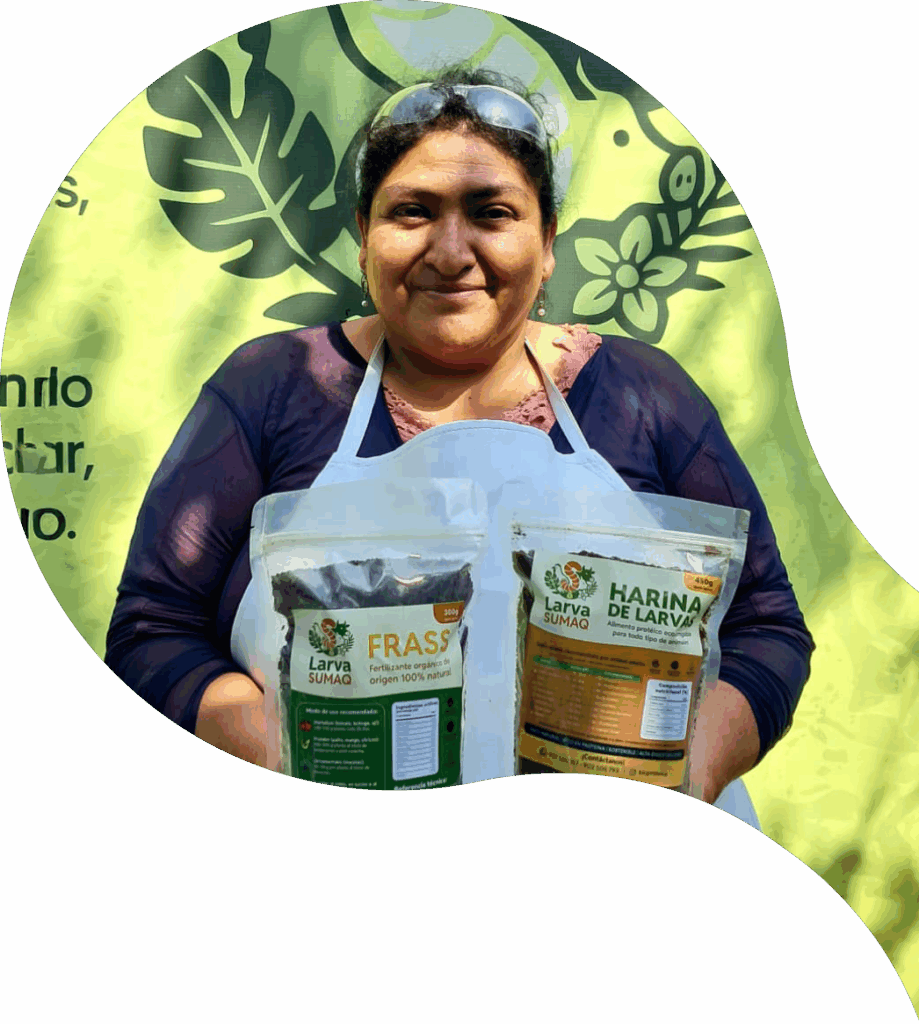
With the production of frass and black soldier fly larvae meal, 13,184 kg of organic waste collected from the Mala municipal market were used.
Used as food for larvae, which consume large volumes on a daily basis.
Contribute to reducing the solid waste load, transforming an environmental problem into an opportunity.
Both products were analyzed and validated by the Universidad Nacional Agraria La Molina, demonstrating that frass improves soil fertility as an organic fertilizer., The larvae meal functions as a protein input for animal feed, rich in proteins, fats and minerals.
8
beneficiaries
1
brand created
167 KG
of larvae flour de mosca soldado
negro
820 KG
of frass fertilizer organic
13.1 T
residuos orgánicos opportunists
13.3 T
of CO2 prevented
Asociación de Mujeres Maleñas por la Circular Economy - AMEC
In Peru, approximately 3 billion plastic bags are generated each year, many of which end up polluting rivers and seas.
Where they can remain for more than 400 years and degrade into microplastics that affect biodiversity. In response, an initiative is being promoted to give these bags a second life.
Transforming them into purses, wallets, wallets, purses and toiletry bags marketed under the brand name “Tikray”.”, Quechua term meaning “to transform”.
During the production process, this association has used 15 kg of plastic, preventing it from reaching the sea, rivers and landfills.
15
beneficiaries
1
brand created
15 KG
plastic exploited
50 KG
of CO2 prevented
How are we doing?
Maleño Trail
Implementation of the “Sendero Maleño”, a tour that integrates sea, culture and valley. It has accessible infrastructure and national positioning through PromPerú's “What are your plans?” platform.
Sustainable Tourism
26 tourism resources registered in MINCETUR's official inventory. In addition, 5 attractions have the TUR4ALL international seal, certifying their universal accessibility.
Tourism planning
Design of key tools for the sector: the Local Tourism Development Plan 2025-2029 and the Profile of the Maleño Visitor, aimed at strategic management of the destination.
Sustainable eco-businesses
Start-up of 4 eco-businesses that generate direct income for more than 50 families, promoting local production with added value.