The second call for proposals for the Resilient Puna Project’s competitive grant program will fund proposals in Cusco, Puno, Apurímac, Lima, and Arequipa, promoting ecosystem conservation and strengthening their camelid and high-Andean crop production chains.
With an exponential increase compared to the first call for proposals, the Puna Competitive Fund—a financial mechanism of the Resilient Puna Project implemented by Profonanpe—has taken a significant step forward by announcing the 30 new winning local initiatives that will strengthen resilience to climate change in the country’s high Andean regions, promoting the conservation of camelids and native crops.
This second round of funding will allocate nearly S/ 14 million to benefit communities and associations located at altitudes above 3,500 meters above sea level in Cusco, Puno, Apurímac, Lima, and Arequipa. The goal of this non-repayable funding is to protect the puna ecosystems and sustainably improve the livelihoods of high-Andean families by combining ancestral knowledge, productive innovation, and Ecosystem-Based Adaptation (EBA) measures.
The selection process for this second edition reflected significant interest and a strong capacity for self-management in the high Andean regions. Out of a total of 120 applications, 36 local initiatives were shortlisted, and 30 successfully passed the rigorous technical evaluation process to receive individual grants of up to S/ 480,000.00 per local climate adaptation initiative.

One of the main areas of focus for this call for proposals is the Andean camelid value chain.
The geographic distribution of the winning organizations shows a strong presence in the Cusco region, which accounts for 13 initiatives. Next are Puno and Apurímac, each with 6 approved projects; Lima (Yauyos), with 3 awarded initiatives; and Arequipa, with 2 winning projects that continue along the path set in the first call for proposals.
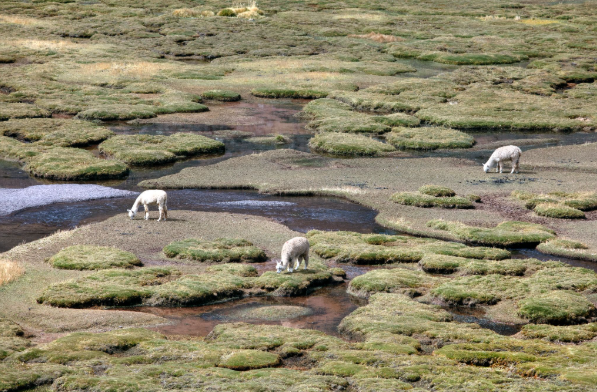
One of the main areas of focus for this call for proposals centers on the South American camelid value chain, which includes 15 projects focused on the sustainable raising of alpacas and 4 on vicuña conservation. Organizations in Puno, such as the Quelcaya Peasant Community in Corani and the Suri Paq’ocha Association in Nuñoa, will implement P4 measures to build resilience through their textile and fiber crafts. Meanwhile, in Cusco, communities such as Limbani Alto Huallatani in Layo and Ccuyo in Maranganí will focus their efforts on the resilient management of communal protected areas for vicuña conservation. Likewise, the Tomas Rural Community, in the province of Yauyos in Lima, will optimize alpaca breeding through the restoration of qochas and sustainable water management in pastures, as will the Community of Chincayllapa in Puyca, Arequipa, which will consolidate a resilient production system.

Initiatives aim to safeguard agrobiodiversity and native crops in the face of extreme water variability, thereby protecting local food security.
The second pillar of local action focuses on the high-Andean crop chain and water conservation and harvesting in response to water stress. Among these initiatives, the Llañucancha Peasant Community in Abancay (Apurímac) stands out; it will establish a Germplasm Conservation Center for native potatoes and Andean tubers using Adaptation-based Solutions (AbE). At the same time, the Choquecancha Indigenous Community in Lares (Cusco) will promote water harvesting and conservation to ensure resilience in the production of native potatoes and quinoa, while in the Colca River basin in Arequipa, the Yanque Peasant Community will restore ancestral terraces and water sources for quinoa production.
These collective efforts by farmers and communities aim to safeguard agrobiodiversity and native crops against frost and extreme water variability, thereby protecting local food security.
The Puna Grant Fund is part of the Resilient Puna project, a multisectoral initiative supported by the Ministry of Agricultural Development and Irrigation, he National Service of Natural Areas Protected by the State, he Ministry of the Environment, Profonanpe, Peru's environmental fund, the German Development Cooperation (GIZ), the Mountain Institute, with funding from the Green Climate Fund and the governments of Germany and Canada.
To see the list of winners from the second call for entries, please visit the following link link.
To learn more about the Puna Competitive Grant Fund, visit the Web page.